
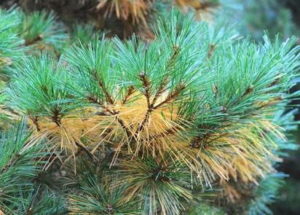
October 19, 2018 – About Pine Needles
As you are out and about, don’t panic if you see evergreen trees dropping needles, or showing yellow or brown color. Needle-drop is a normal part of the life cycle. Inner needles are the oldest, and as they age and get shaded by new growth, they photosynthesize less effectively and are eventually shed. The tree lightens its load, which is
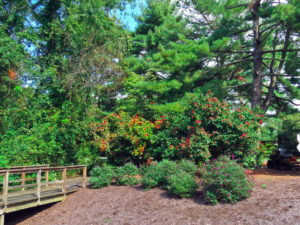
October 12, 2018 – Linden Viburnum
Viburnum dilatatum is commonly called linden viburnum because its leaves resemble those of the linden tree. It is native to open forests, forest margins, lowlands, and foothills in China, Korea and Japan, and can be found on the Medford Campus at the intersection of Medford Leas and Estaugh Way by the wooden bridge. It is a deciduous shrub that typically matures

October 5, 2018 – Autumn
As you are out and about in the Arboretum, enjoy the Autumn season and the color that it brings. In the words of William Cullen Bryant, “Autumn… the year’s last loveliest smile.”
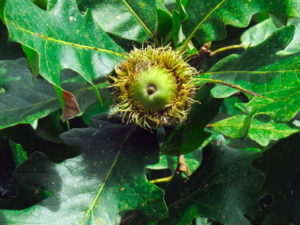
September 28, 2018 – Bur Oak
As you enter the Medford Campus from Wilkins Station Road, by the silo, you will likely note the group of Bur Oaks, Quercus macrocarpa, along the side of the road. These native trees feature significantly sized acorns – the largest of any North American oak. This fall season, the NJ State Forestry Tree Collection Project has asked if they could
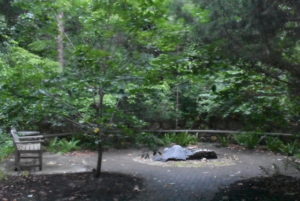
September 21, 2018 – Meditation Garden
The Meditation Garden, located by parking lot A on the Medford Campus is a living memorial to former residents, as well as a quiet spot for meditation for current residents and visitors. The woodlands setting is purposely simple to allow for visitors to enjoy the peace of the location. Just recently, ferns, Thelypteris decursive-piñata, were planted to enhance the space.
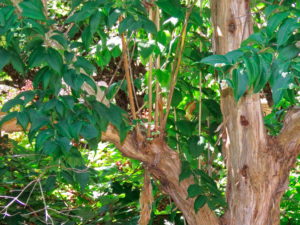
September 14, 2018 – Chinese Seven-Sons Tree
Chinese Seven-Sons Tree, Heptacodium miconioides, is a fountain-shaped tree that features clusters of fragrant, creamy-white flowers in late summer to early fall. Flowers appear in clusters, with each containing 7 tiny flowers (hence the common name). Exfoliating bark adds another layer of interest. This plant, native to China, is rare; but you can find it on the Medford Campus in