
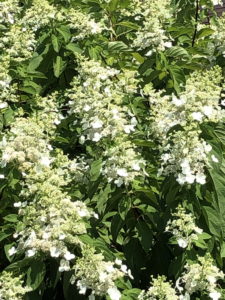
Aug. 9, 2019 – Hydrangea paniculata
A flowering ornamental that can stand up to the dog days of August is the Hydrangea paniculata, commonly called panicle hydrangea. The white blooms will carry us into the early fall season. This vigorous, upright shrub is native to China and Japan. You can find it in full bloom on the Medford Campus in the Atrium, to the left as you enter the Community Building.
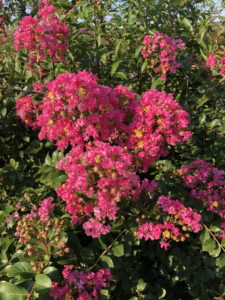
Aug. 2, 2019 – Crape Myrtle
Always a fan favorite, the Crape Myrtle trees, are now in full bloom giving us pops of vibrant pink color throughout the Arboretum. These bursts of vibrant color thrive in the heat of the season.
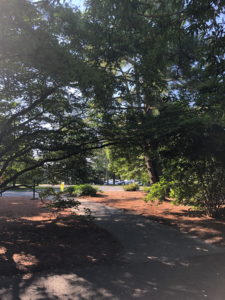
July 26, 2019 – The Impact of Trees
We all enjoy the benefits of trees, especially in the summer months, as we are out and about in the Arboretum. As you move along the pathway from the Community Building on the Medford Campus towards the Bridlington neighborhood, you will enjoy the cooling shade and impact of a number of different trees.
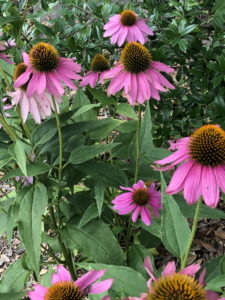
July 19, 2019 – Coneflowers
Flower Power is alive and well in Court 13 on the Medford Campus. As you are out and about in the Arboretum, you may enjoy the vibrant colors of the echinacea. Commonly known as Coneflowers, these members of the daisy family are now in bloom. You are sure to enjoy the colorful blooms which hold up very well to the heat.
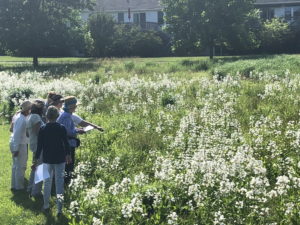
July 12, 2019 – Meadow restoration
A meadow can be described as a field habitat consisting primarily of grasses and other non-woody plants. These ecosystems play a crucial role in the well-being of nature. Within the Arboretum we are fortunate to have two Meadow areas, one on each Campus. The Meadows provide shelter for animals that are unable to seek refuge in trees, such as rabbits and land-dwelling birds. In addition, the insects that find homes in the Meadows are often pollinators that grow amongst the grasses.
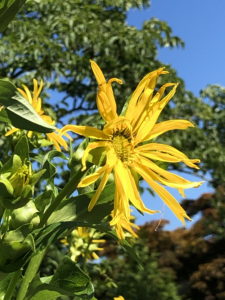
July 5, 2019 – Cup Plant
Silphium perfoliatum, commonly called cup plant, is a sunflower-like plant which as you are out and about in the Arboretum, you can find along the side of the Medford Campus Community Building parking lot. It typically grows on tough, strong stems to 4-8′ tall and is distinguished from the other silphiums by its square/quadrangular stems and pairs of cup-forming leaves.