
Meadows have long been a feature of the Barton Arboretum at Medford Leas.
The Lumberton meadow is a retention basin that is surrounded by homes on Woodside Drive. A renovation of that meadow began in 2014 and continues to be monitored by a group of Lumberton residents.
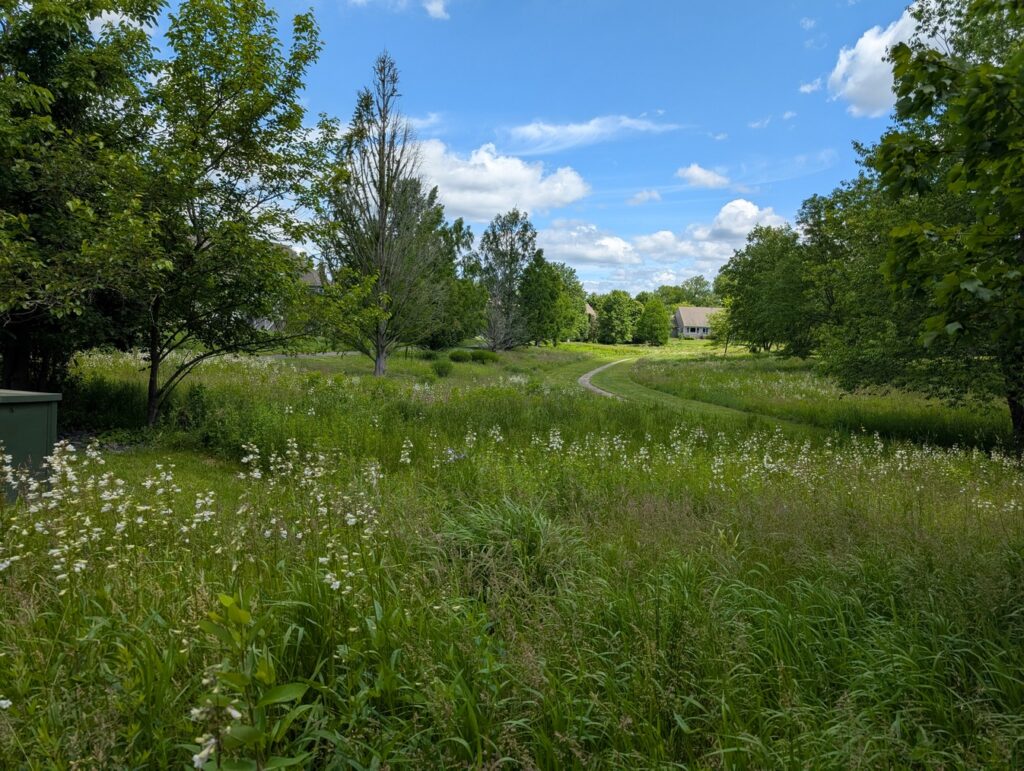
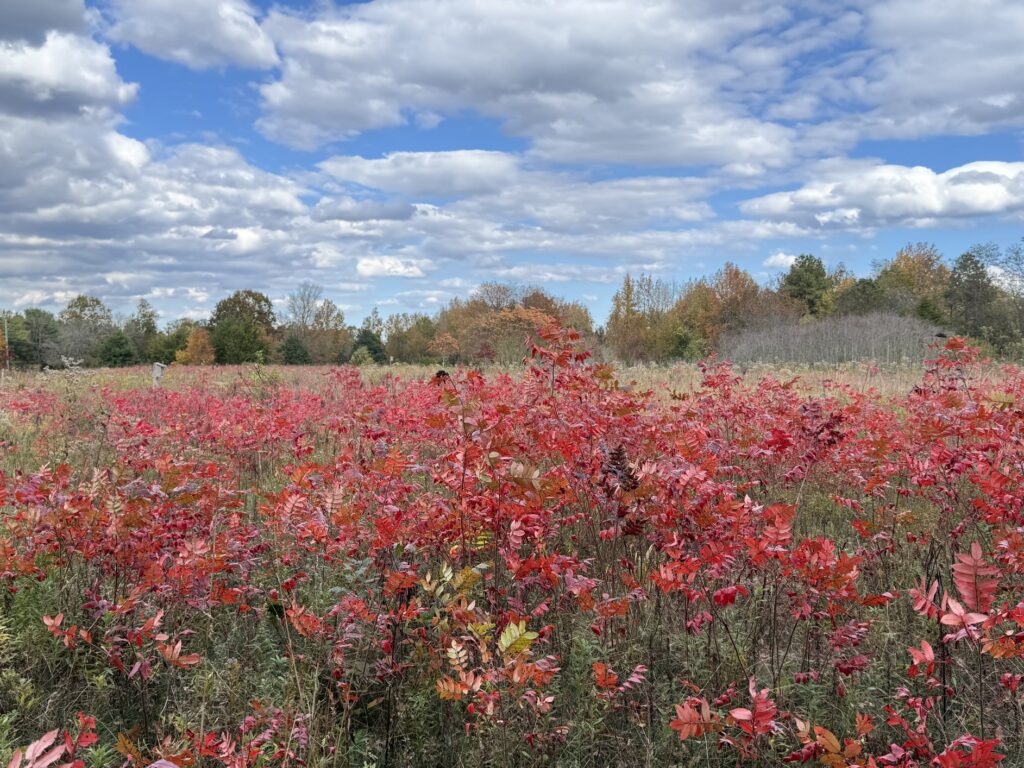
The Medford campus meadow lies on both sides of Estaugh Way from the silo entrance on Wilkins Station Road to the intersection with Medford Leas Way. In 2018, Medford Leas contracted with Larry Weaner Landscape Associates to renovate the Medford meadow with the goals of improving overall attractiveness, sustainability for native plants and habitat for wildlife.
Meadows are not self-sustaining. They require management that can include mowing, fire, removal of invasive and reseeding or replanting of desired species. Underlying the care and maintenance of our meadows is an ecological landscape design philosophy that seeks to guide natural processes rather than fighting them. There are several books in the Nature Center Library that discuss this approach to landscape management.
Garden Revolution: How Our Landscapes Can be a Source of Environmental Change by Larry Weaner and Thomas Christopher is one. They advocate for an ecological garden design that lets the landscape make many of the decisions about what grows well in a particular location. This means frequently but not exclusively using native plants that naturally occur and that are critical habitat for native insects, birds and fauna.
Planting in a Post-Wild World by Thomas Rainer and Claudia West stresses the value of native plants for creating landscape designs that show resilience to climate change. Like Weaner & Christopher, the authors do not advocate for native species only in their landscapes. They prefer to focus on a plant’s performance and adaptability to a particular location. “We firmly believe that designing with native plants still matters. I fact, it matters more than ever. It is our challenge to reimagine a new expression of nature—one that survives within our urban & suburban landscapes, and at the same time performs vital ecosystem functions needed to ensure life.”
— Judy Austermiller